The Mathematics of the 2026 Margin Squeeze
In May 2026, gasoline prices in the Minneapolis–St. Paul metro surged by an astonishing 42.0% year-over-year, dragging total regional energy indices up by 17.6%. For the average Saint Paul restaurant operator, that single data point represents an operational nightmare. It impacts every inbound delivery surcharge, inflates the cost of utilities to keep the fryers running, and siphons discretionary income directly out of the wallets of their local dining base.
Yet, the most alarming statistic from the Bureau of Labor Statistics is not the input cost—it is the price ceiling. While overall regional inflation hit 4.7%, restaurant “food away from home” prices in the metro rose just 0.9% year-over-year, and actually dropped 0.2% between March and May. Saint Paul restaurants are absorbing the inflation shock themselves. They are terrified to raise menu prices because they know the consumer is already stretched to the breaking point.
Nearly 60% of regional hospitality businesses reported wholesale costs jumping 5% or more over the last 12 months, but only 33% felt they could raise their retail prices by that same margin.
Welcome to the 2026 margin war. From Lowertown to University Avenue, Saint Paul restaurateurs are caught in an economic vice grip. They are battling the gravity of soaring localized wages, crippling compliance costs, and a socio-political labor shock that has left dining rooms empty and doors locked. Here is exactly what the data reveals about the state of Saint Paul's dining scene—and how operators are rewriting their survival playbooks.
The Policy and Payroll Gravity
The $16.37 Minimum Wage Reality
Unlike neighboring states, Minnesota does not permit a tip credit, meaning operators must pay full minimum wage before a single dollar of gratuity hits the pool. While the statewide minimum wage floor sits at $11.41 for 2026, Saint Paul operators are playing by a much steeper set of rules.
As of January 1, 2026, Saint Paul's minimum wage for large employers (101+ employees) hit $16.37 per hour. By July 1, small businesses (6–100 employees) match that $16.37 rate, while micro-businesses cap out at $14.25. When combined with payroll taxes, workers' compensation, and rising food costs, the traditional restaurant math simply fractures under the weight of this localized mandate.
We are seeing this labor cost gravity across the Midwest. Just down I-94, Chicago operators are facing a brutal margin crunch under their own $16.60 wage floor. But in Saint Paul, this wage escalation is colliding with aggressive new administrative hurdles.
The Burden of the Minnesota Paid Leave Act
Adding fuel to the payroll fire is the new Minnesota Paid Leave program, enacted January 1, 2026, which offers job protections and partial wage replacements. While broadly popular with workers, it is proving to be a logistical nightmare for independent operators operating on thin staffing buffers.
In a May 2026 Federal Reserve Bank of Minneapolis survey, over 60% of hospitality respondents stated that the paid leave mandate significantly increased their administrative time and operating costs. Furthermore, roughly 40% reported an immediate uptick in employee absences. For a neighborhood bistro or a 4th Street cafe, losing a line cook or a lead server on a Friday night without a deep bench to pull from means compromised service, locked doors, or closed dining rooms.
Operation Metro Surge: A Demand and Labor Shock
You cannot discuss the Twin Cities restaurant economy in 2026 without addressing the massive socio-economic disruption of Operation Metro Surge. This localized immigration enforcement wave fundamentally derailed the hospitality labor supply and decimated neighborhood dining demand.
- Labor Drain: An estimated 4,600 leisure and hospitality jobs were lost in Minnesota between January and March 2026 alone, directly linked to the surge.
- Lost Hours and Wages: The sector bled 3.8 million working hours and $71 million in lost wages. Overall private-sector average weekly hours dropped to 32.1 hours in January—the lowest recorded level since at least 2007.
- Operational Retreat: Twin Cities leisure and hospitality employment plunged 4.2% year-over-year in January, compared to a nominal 0.1% dip nationally.
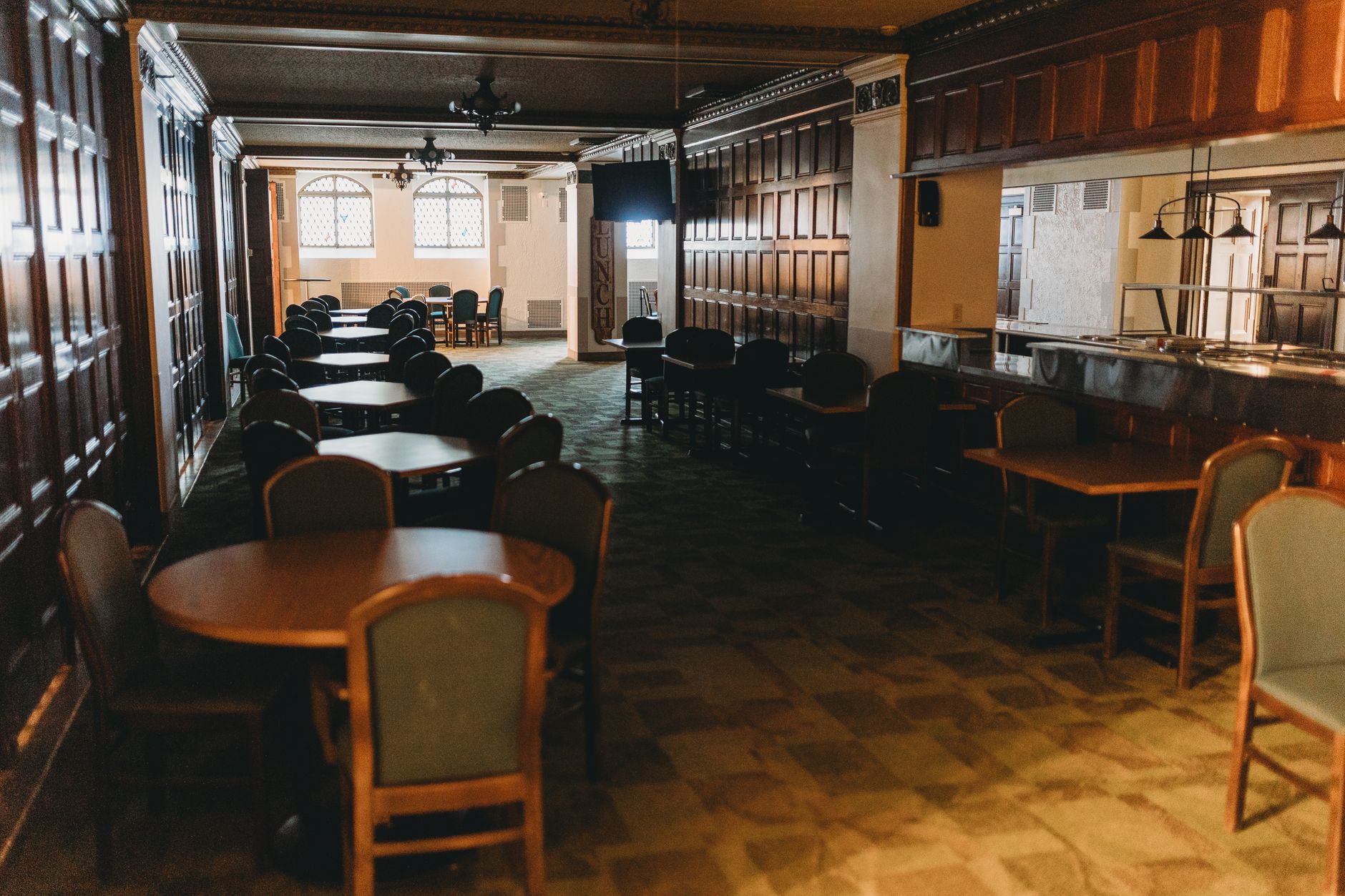
The cultural impact on Saint Paul has been profound. The city boasts rich, interwoven immigrant communities—Somali, Hispanic, Hmong, Laotian, and Ethiopian—where restaurants serve not just as eateries, but as vital community anchors. The fear generated by the surge kept both staff and customers at home. On University Avenue and in pockets of the city, operators reported being "pretty much back to COVID," locking their front doors, pulling tables, and operating strictly as pre-order takeout facilities due to security concerns and zero staffing depth. This phenomenon is metro-wide; as we highlighted in our breakdown of the Minneapolis Metro Surge shock, the ripple effects are reshaping how diners access their favorite neighborhood staples.
Consumer Behavior: Trading Down and Premiumization
As operating costs skyrocket, the Saint Paul consumer is actively retreating. In statewide surveys, over half of operators reported lower revenues and profits heading into the summer of 2026 compared to the previous year. Customers are ruthlessly price-sensitive, tightly clutching their discretionary budgets.
The "Butts in Chairs, Lower Tickets" Phenomenon
Full-service operators are observing a fascinating trend: traffic isn't necessarily collapsing across the board, but check averages are. Diners are actively trading down. A table of four that might have ordered steaks, appetizers, and craft cocktails in 2023 is now opting for a shared artisan pizza and tap beers. The dining room looks full, but the point-of-sale data shows check averages slipping by $1.00 to $1.50 per guest.
Weekend Reliance and GLP-1 Impacts
Conversely, special occasion dining continues to show resilience, creating a massive disparity between weekday and weekend revenues. Fine-dining operators in the Rice Park area report steady Saturday night reservations, but Tuesday and Wednesday services are alarmingly soft. Interestingly, high-end operators are noting an era of "premiumization alongside pullback"—guests are ordering less food by volume (a trend some attribute to the rising adoption of GLP-1 appetite suppressants), but are willing to pay top dollar for premium spirits and hyper-quality, single-item entrees when they do decide to spend.
Downtown Saint Paul: A Tale of Two Cities
The narrative surrounding downtown Saint Paul right now is intensely polarized. On local forums and Reddit threads, the discourse is dominated by closures, complaints about transient populations, expensive parking, sky-high HOA and tax burdens, and relentless road construction that chokes off foot traffic. Lowertown has absorbed several high-profile closures, leading to descriptions of certain corridors as "ghost towns."
Yet, running parallel to this struggle is a massive wave of high-profile, institutional reinvestment betting on the city's future.
The 4th Street Market District Vision
In May 2026, a powerhouse local ownership group—including Wild owner Craig Leipold, Ecolab, and Securian—purchased the historic Saint Paul Hotel. Their blueprint includes sweeping renovations and the addition of robust dining and bar experiences. This aligns heavily with the city's "4th Street Market District" vision plan, which aims to stitch together a vibrant, walkable corridor connecting the James J. Hill Center, the Ordway, and City Hall directly down to Union Depot, the Farmers' Market, and CHS Field.
For operators situated along these anchor points, the future holds immense promise. But surviving the short-term margin compression requires radical operational changes right now.
The 2026 Survival Playbook
Faced with a $16.37 wage floor, 42% gas inflation, and highly sensitive consumers, Saint Paul operators are executing three distinct strategies to protect their bottom lines.
1. Menu Engineering for Margins
Operators are slashing sprawling, ingredient-heavy menus in favor of high-margin, cross-utilized items. The era of carrying 15 different proteins is over. Instead, kitchens are leveraging local purveyors to highlight a few stellar items, balancing out expensive cuts of meat with elevated, vegetable-forward dishes that carry a 15-20% food cost.
2. Controlled Service Models
The pivot back to takeout-only or locked-door, reservation-only models on University Avenue isn't just a reaction to the Metro Surge—it’s a long-term labor strategy. By forcing demand into predictable windows (pre-orders or strict reservation blocks), operators can staff exactly to demand, eliminating the idle labor hours that destroy profitability at $16.37 an hour.
3. Relentless Tech and Automation
You cannot afford to pay an hourly manager $25 an hour to sit in the back office responding to Yelp complaints. The operators surviving this squeeze are auditing every single administrative task. If an AI or a software tool can handle it, it is immediately offloaded. As we have repeatedly warned operators, manual review management is killing your restaurant's margins. Protecting your digital storefront is paramount because, in 2026, an unaddressed 1-star review on Google or DoorDash will cost you a weekend reservation—and right now, you cannot afford to lose a single Friday night cover.
The Bottom Line
Saint Paul's restaurant industry is navigating an unprecedented gauntlet. The localized inflation, regulatory burdens, and socio-economic shocks of early 2026 have pushed the traditional operating model to the breaking point. However, the operators leaning into tight operational control, menu discipline, and the cultural strength of their neighborhoods are positioned to survive—and eventually thrive—as the downtown reinvestment thesis takes hold.
Stop losing local diners to bad reviews. In a market where every single reservation counts, your digital reputation is your most critical asset. ReviewReport's AI-driven platform aggregates your reviews from Google, Yelp, and DoorDash, generating instant, on-brand responses so your team can get out of the back office and back onto the floor. Take control of your margins today with ReviewReport.